

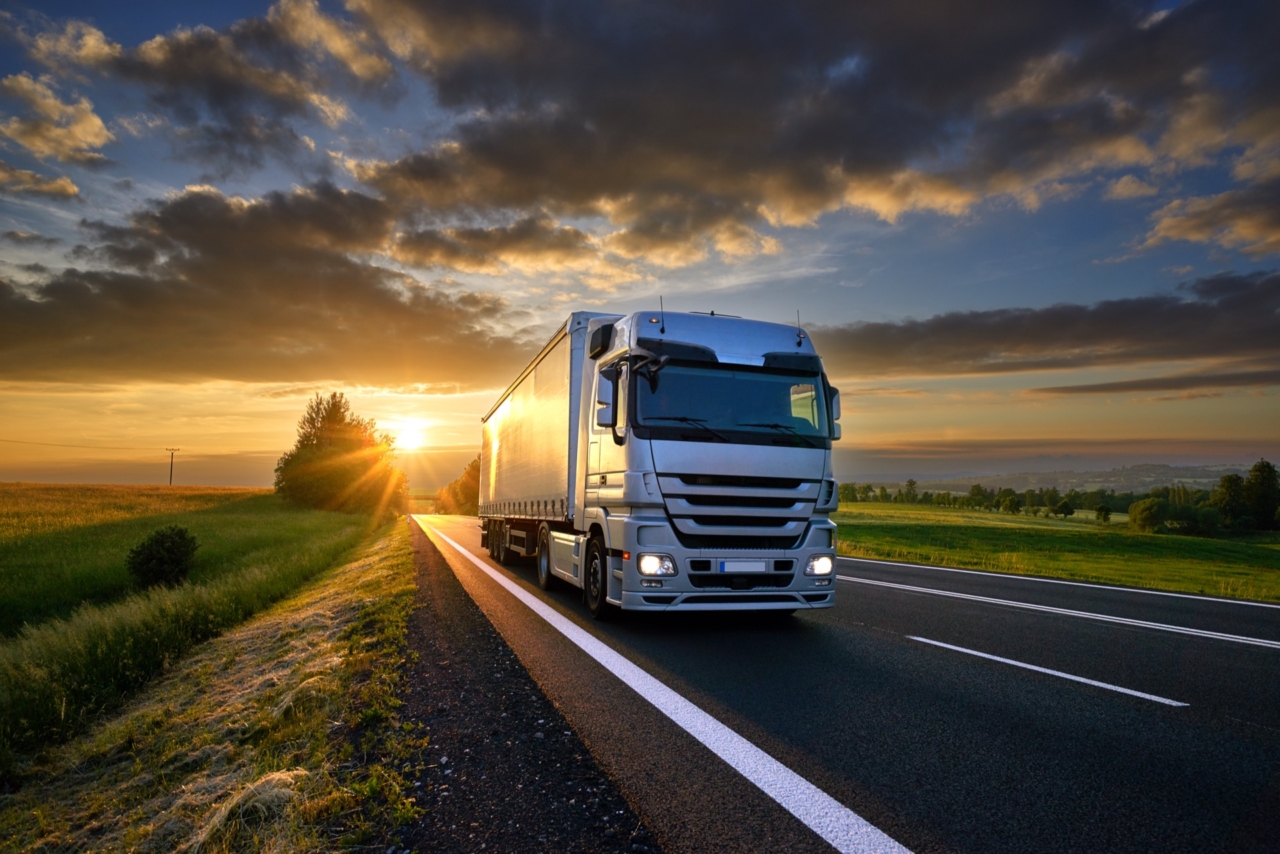
Argent’s waste-based biodiesel is a distilled product that can be directly blended with conventional diesel and used as a fuel, typically in trucks, buses, vans and cars. In this way it contributes proportionately to the lowering of CO₂ emissions of the vehicles it powers.
B100 explained
Biodiesel production process: B100 explained
The biodiesel production process converts waste fats and oils into a renewable fuel that can be used as B100 or blended with conventional diesel. At an industrial scale, carefully controlled chemical conversion, purification and testing create a consistent fuel suitable for transport and other diesel-powered applications.
Using waste cooking oil, degraded vegetable oils and animal fats as feedstocks gives materials that may otherwise be discarded a valuable new purpose. The result is a lower-carbon alternative that can help operators reduce their reliance on fossil diesel while maintaining the fuel quality needed for reliable performance.
What is the process?
What is the biodiesel production process?
Biodiesel production is a chemical conversion process that transforms oils and fats into fatty acid methyl ester, commonly known as FAME biodiesel. When supplied without fossil diesel, the finished fuel is referred to as B100.
So, how is biodiesel made? The feedstock is first treated to remove impurities and manage free fatty acids. It then passes through controlled reactions that convert the oils into biodiesel, before the fuel is separated, purified and tested.
Industrial production requires more than simply converting oil into fuel. Feedstock quality, process conditions and quality control must be managed throughout the production process of biodiesel to deliver a stable and consistent final product. This is particularly important when working with difficult or severely degraded waste oils.
The exact production method can vary according to the type and condition of the raw material. However, the main biodiesel production process steps are:
The step-by-step process
Step-by-step biodiesel production process





Pre-treatment
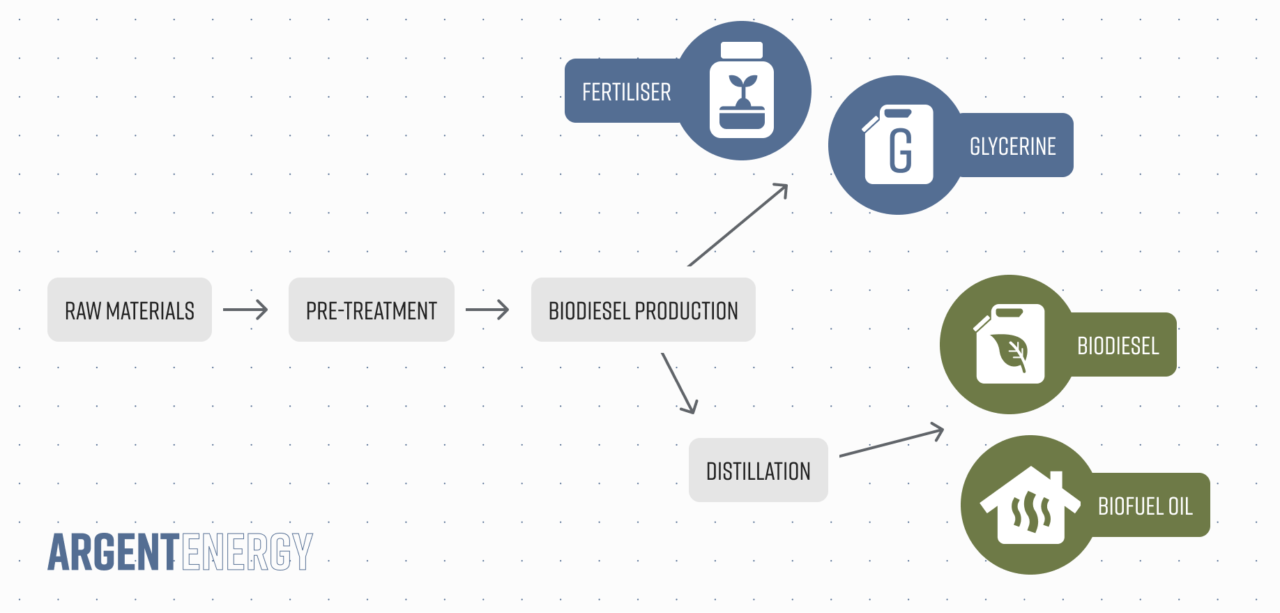
The severely degraded fats & oils are processed to remove impurities in order to enhance biodiesel yield, decrease in-line process and maintenance issues as well as decrease overall chemical usage.
Biodiesel production – Step 1
Any free fatty acid present in the oil is reduced to a manageable level limiting issues further down the process. Argent’s capability to do this is one of the main reasons why we can handle severely degraded oils such as FOG and grease trap waste.
Biodiesel production – Step 2
The oil is reacted again, under different conditions, and at this stage the vast majority of the biodiesel is synthesised. Any oil that is not converted at this stage is collected and put back into the process, ensuring a high conversion to biodiesel.
Side product creation
The discharges from the previous two steps are collected and then reacted together; yielding our fertiliser and glycerine side products.
Distillation
Post-reaction the crude biodiesel is put through a distillation column as a final polish to ensure Argent Energy produces biodiesel of a consistent high quality. At the distillation step, biofuel oil is also collected as a by-product which is used as marine fuel making sure that very little waste is produced overall during the process.
Completion
The biodiesel undergoes comprehensive testing and analysis, and is then ready to go.
Why waste oils?
Sustainable B100 production from waste oils
Biodiesel production from waste cooking oil replaces virgin fossil feedstocks with resources that have already served another purpose. Degraded cooking oils, animal fats and other difficult waste streams can be collected, treated and converted into a usable transport fuel.
This approach combines waste recovery with renewable fuel production. It also supports a more circular process by finding uses for glycerine, fertiliser and biofuel oil produced alongside the primary fuel.
Argent Energy specialises in second-generation biodiesel made from waste fats and oils, producing distilled fuel that can be blended directly with conventional diesel.
Why process matters
Why the biodiesel production process matters
A well-controlled sustainable biodiesel production process creates value at several levels. It converts difficult waste materials into usable fuel, reduces dependence on fossil diesel and supports immediate transport decarbonisation.
Process efficiency also affects commercial and environmental performance. Improving conversion, recovering unprocessed oil and making productive use of by-products helps maximise the value obtained from each feedstock.
Just as importantly, purification and final testing provide confidence that the resulting B100 fuel is consistent and suitable for its intended application.
Fuels must undergo and pass rigorous testing to become available on the market. Read more on our accreditations below.
Process to product
From B100 to fuel solutions
Once biodiesel has been produced and meets the required quality standards, it can be supplied as B100 or blended with conventional diesel.
Different blend levels allow renewable content to be matched to vehicle approvals, operational requirements and decarbonisation goals. Argent Energy offers high-blend diesel options ranging from B10 to B100, although the appropriate blend depends on the application and equipment requirements.
B100-to-Blended
How biodiesel is blended with diesel
The letter “B” identifies the proportion of biodiesel within a fuel blend. B7 contains up to 7% biodiesel, while B10, B20 and B30 contain progressively higher renewable content. B100 is entirely biodiesel.
Higher blends can provide greater greenhouse gas reductions, but operators should consider vehicle manufacturer approvals, storage conditions and operational requirements when selecting a fuel.
Introducing Dieselite
Introducing Dieselite
What is Dieselite?
Dieselite is Argent Energy’s high-blend fuel for heavy-duty vehicles, including HGVs, buses and coaches. It contains between 10% and 30% sustainable second-generation biodiesel, compared with a maximum of 7% in standard B7 diesel.
Dieselite as a drop-in replacement fuel
Dieselite is designed to integrate with existing vehicles and refuelling infrastructure without requiring modifications. It provides fleet operators with a practical way to increase renewable fuel use while maintaining performance comparable with conventional diesel.

Dieselite
Discover how Dieselite can help your fleet reduce greenhouse gas emissions without disrupting day-to-day operations.
Industries and Applications
Industries and Applications
We produce fuels which have many varied applications, and the list is growing longer. Find out more about how we collaborate to reduce the carbon footprint of many industry sectors.